
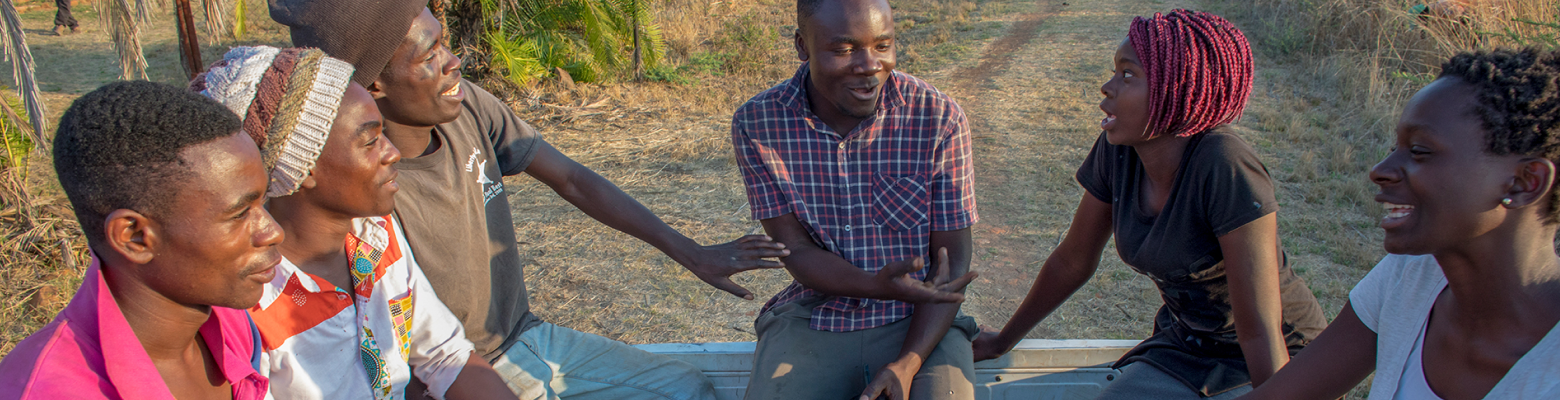
In 2025, the Joint Pogramme in eastern and southern Africa (ESA) safeguarded and expanded access to people-centred HIV and sexual and reproductive health (SRH) services despite funding shifts, while advancing legal, gender-transformative and youth-responsive approaches and laying foundations for long-term sustainability. Stand-out results include multi-country readiness for long-acting pre-exposure prophylaxis (PrEP), region-wide acceleration of harm reduction and adolescent and youth-friendly services, renewed momentum on the prevention of vertical transmission of HIV, paediatric ART, stronger community-led and rights-based responses, and concrete steps toward sustainable financing, service integration and emergency readiness.
Eastern and Southern Africa
Overview Of UNAIDS Results
With the Joint Programme’s advocacy, guidance, tools and other support, nine countries completed preparedness for lenacapavir introduction covering policy, regulation, financing and delivery while two countries began clinic pilots. Inclusive prevention expanded by way of the last‑mile condom distribution in two countries while national condom strategies were endorsed in another two. Technical support to scale up harm reduction activities in three countries improved access to HIV services among people who use drugs, while updated guidance on paediatric/adolescent ART, adolescent ART sequencing, postnatal prophylaxis, and breastfeeding informed regional priorities and better access to quality HIV treatment and care. The Joint Programme also guided Botswana to attain Gold Tier status on the path to the elimination of vertical transmission and supported six countries in transitioning to triple elimination frameworks, with better data quality and stronger community engagement.
The Joint Programme with partners produced evidence to support the scale up of peer‑led, youth‑responsive and community‑based HIV and SRH services. For instance, support to the development of a new policy framework resulted in the operationalization of three model adolescent and youth friendly centres in one country while 53 000 young people were reached online with health information and counselling. In addition, disability‑inclusive comprehensive sexuality education programmes were rolled out in two countries, and a regional Menstrual Health & Disability guideline was developed and disseminated. The Joint Programme also supported the We Belong Africa initiative to launch a policy guidance which provided stakeholders with practical directions to address harmful norms, improve access to quality health services and integrate HIV-related human rights standards into national health policies.
The Joint Programme supported state actors to improved accountability and tracking of gender and HIV commitments through the operationalizing, monitoring, and reporting on the implementation of CSW Resolution 68/1 on women, girls, and HIV. This tracking mechanism informed the Southern African Development Community (SADC) position paper and policy brief, positioning the region with a strong evidence base to strategically advocate for the reaffirmation of the 2024 CSW Resolution 68/1 on Women, the Girl Child and HIV/AIDS at the 70th Session of the Commission of the status of women in March 2026. Furthermore, the Joint Programme demonstrated transformative results with the ratification of ILO Convention 190 by Angola and Mozambique and demonstrating tangible progress in reducing gender-based violence in the work environment. Technical and financial support by the Joint Programme to five countries strengthened access to SRH services for men and boys, and drove institutionalization of positive masculinity frameworks, expanded referral pathways and standardized service packages to improve uptake and quality of SRH services among men and boys.
Fourteen countries finalized Sustainability Roadmaps with guidelines and tools from the Joint Programme. Commitments were achieved for increased health budget shares, inclusion of HIV services into National Health Insurance Schemes, and health protection in 10 countries. Twenty countries benefited from capacity building on maintaining SRH and HIV services in emergencies and the Joint Programme’s work in humanitarian settings expanded, building the capacity of over 180 participants on community-led approaches, while multi-agency preparedness efforts enhanced continuity of HIV and nutrition services during the 2025 funding shift. These achievements underscore the Joint Programme’s catalytic role in helping countries sustain essential HIV gains, protect the most vulnerable in complex settings, and advance resilient, integrated and rights-based systems across eastern and southern Africa.
Investments
ESA Investments in
ESA Investments in


