

Logo of UNAIDS

Results and 
Transparency Portal

toggle

Main navigation

  • Home
  • Joint Programme
    • UNAIDS in Action
    • 2022-2026 UBRAF
    • UN Reform & the 2030 Agenda
  • Results
    • UNAIDS Results
    • Result Areas
    • Regions
    • Countries
    • Cosponsors
    • Performance Indicators
    • Secretariat
  • Resources and Investments
    • Resources and Investments
    • IATI
  • Donors
    • UNAIDS Resources Mobilization
    • UNAIDS Contributors
    • Evaluation, Audit and Risk Management
  • Documents Library
Search
Filter By:
Strategy/Framework/UN Reform/Reports
Result Area
Regions
Agency
Countries
Content Type
Year
Banner Image of UNAIDS Secretariat
infoCredit: 2016infoCredit: 2016

UNAIDS Secretariat

UNAIDS Secretariat

Overview
UNAIDS Secretariat Performance
Investments
Reports
Other Resources
Overview

The UNAIDS Secretariat, in concert with Cosponsors, drives the global HIV response and mobilizes political commitment and resources. It ensures coordinated strategic focus, effective functioning and accountability across the Joint Programme’s work to support countries and communities in reaching the objectives and global AIDS targets of the 2021–2026 Global AIDS Strategy and the 2021 UN General Assembly Political Declaration on HIV/AIDS.

Using an inequalities lens, the UNAIDS Secretariat advocates for global health and social justice including equitable access to HIV services, empowers communities and improves the enabling environment and the sustainability of the HIV response.

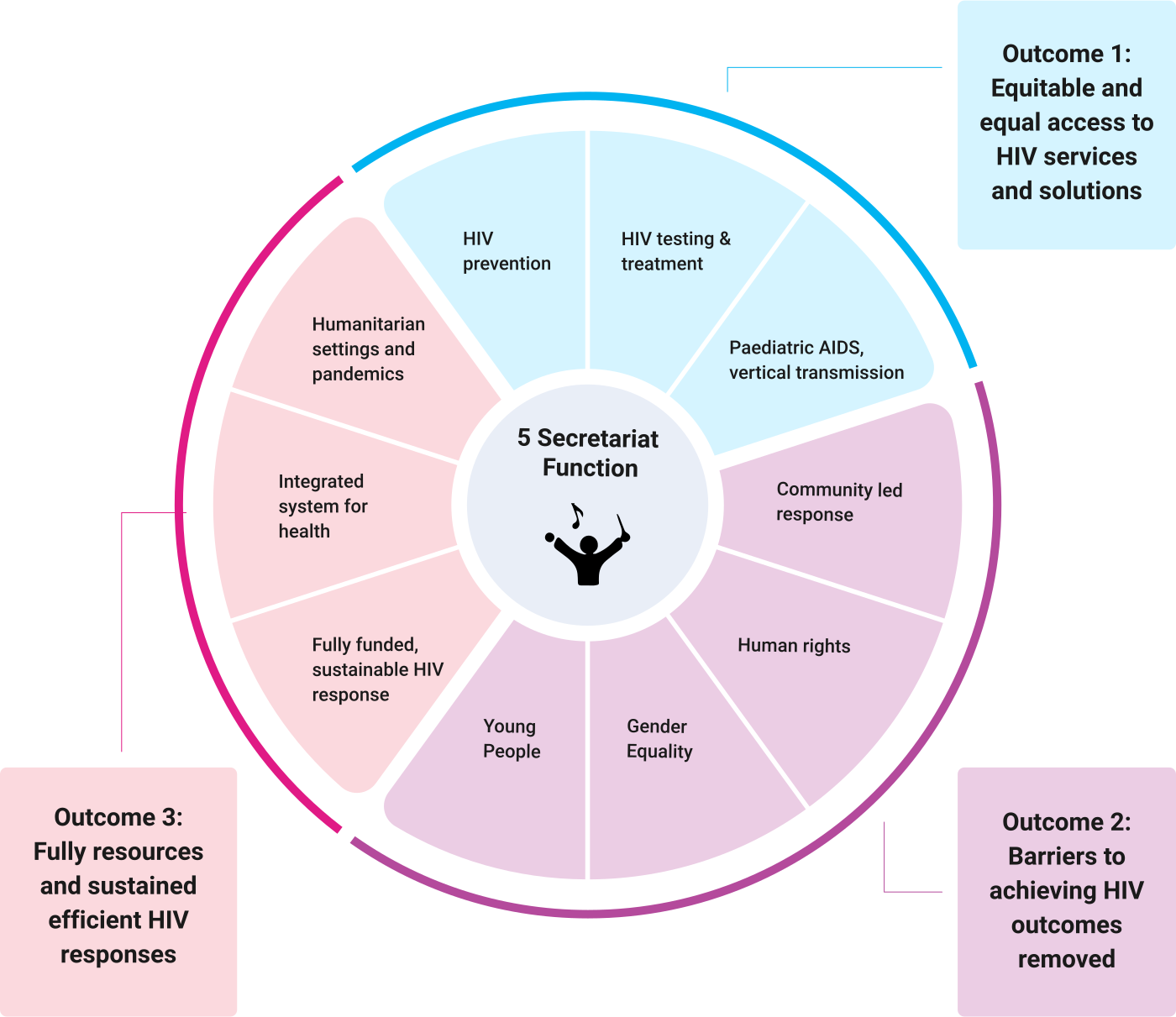
Various Secretariat Functions detail the core role and responsibilities of the Secretariat to deliver results through contributing to all Result Areas to achieve the Joint Programme three outcomes (as defined in UNAIDS Unified Budget, Results & Accountability Framework (UBRAF) and save lives in collaboration with convening Cosponsors according to the UNAIDS Division of Labour.
S1: Engage political and community leaders, high-level platforms, activists, other champions and key stakeholders to address the multisectoral nature of the global AIDS epidemic, reduce inequalities and reach the end of AIDS as a public health threat and advance the Sustainable Development Goals.

S2: Enhance political will, convene strategic initiatives and partnerships, and foster mobilization of sustainable resources. Provide thought leadership, advocacy, knowledge management, and guidance, tools and support for a rights-based, gender transformative AIDS response–– including through innovative and community-led approaches.

S3: Collect pertinent data from countries and report progress towards global HIV response targets. Lead the HIV response tracking and reporting. Enhance countries’ strategic information capacities on the AIDS epidemic and response and guide the reduction of HIV-related inequalities.

S4: Work with countries and communities to strengthen national mechanisms for effective coordination and coherence. Support inclusive and sustainable national HIV responses to reduce inequalities and end AIDS as a public health threat through UN Joint Teams on AIDS in countries and other global and regional interagency mechanisms.

S5: Mobilize, facilitate and support Member States’ and other PCB stakeholders’ equal and effective engagement in governance of the Joint Programme and in its contribution to the implementation of the Global AIDS Strategy and the 2030 Agenda. Lead the Joint Programme’s mutual accountability mechanisms for results and resources, evidence-informed decision-making, evaluations and transparency to enhance its impact.

The 5 Secretariat Functions contribute to all 10 Result Areas across the 3 UBRAF Outcomes

 
Expand
UNAIDS Secretariat - popup image below accordian
close
UNAIDS Secretariat - popup image
Find more information on the Secretariat Functions on the 2022-2026 UBRAF page
UNAIDS Secretariat Performance

Below are selected results delivered by the UNAIDS Secretariat in 2025 across its five core functions, highlighting how support to countries and partners contributed to advancing the three outcomes of the Global AIDS Strategy:

  • Global leadership and strategic direction: Led the development and adoption of the Global AIDS Strategy 2026–2031 through an inclusive process and with strategic stakeholder engagement. Grounded in human rights, gender equality and community leadership, this new evidence-informed Strategy sets the direction for ending AIDS as a public health threat by 2030, and provides a shared vision for countries, communities and partners.
  • Sustaining political commitment: Contributed to at least 17 global policy forums and supported 74 countries to strengthen national HIV strategies, helping to maintain HIV as a priority within broader health and development agendas. This work included support for data modelling and guidance for high-impact interventions and innovations, new target-setting, costing and monitoring and evaluation frameworks and mid-term reviews. 
  • Convening partnerships for collective action: Mobilized governments, communities, networks of people living with HIV, donors and partners, strengthening global collaboration and shared accountability—particularly on stigma and discrimination and paediatric AIDS.
  • Strengthening strategic information: Supported HIV estimates in 182 countries and community-led monitoring initiatives in 34 countries, contributing to more data-driven, effective and people-centred responses. The UNAIDS AIDSInfo website provides the most comprehensive public compendium of HIV data, including HIV estimates, an HIV/AIDS inequality visualization platform, and information on laws, policies and financing.
  • Coordinating the Joint Programme at country level: Aligned the expertise and resources of the Joint Programme in 85 countries to better support national HIV responses, and advanced the integration of HIV into United Nations Sustainable Development Cooperation Frameworks in 75 countries.
  • Advocating for sustainable and community-led responses: Promoted increased investments in health sovereignty and community-led responses, reinforcing the importance of country ownership and community leadership. The new HIV Response Sustainability Roadmap Part B Companion Guide further strengthens the focus on transition and sustainability planning to help countries navigate funding shifts. 
  • Ensuring transparency and accountability: Maintained strong performance reporting, financial transparency and oversight, reinforcing trust in the Joint Programme among donors, partners and communities.

Indicator Data

filter
Filter By
Download
Find more information on All indicators page
Investments
UNAIDS Secretariat Investment in

Reports

2025-Secretariat-Functions-report
Jun 2026
2025 Secretariat Functions report
UNAIDS-Secretariat_2024_0
Jul 2025
2024 UNAIDS Secretariat Report
2022-2023 UNAIDS Organizational Report
Nov 2024
2022-2023 UNAIDS Secretariat Organizational Report
12. 2022 The UNAIDS Secretariat
Aug 2023
2022 UNAIDS Secretariat Organizational report
UNAIDS Secretariat_Organizational report_2021_0
Jun 2022
2020-2021 UNAIDS Secretariat Organizational Report
UNAIDS Secretariat_Organizational report_2020
Jun 2021
2020 UNAIDS Secretariat Organizational Report
Secretariat_Organizational report_2018-2019
Jun 2020
2018-2019 UNAIDS Secretariat Functions Report
UNAIDS_Organizational report_2018
Jul 2019
2018 UNAIDS Secretariat Organizational Report

Other Resources

About UNAIDS | UNAIDS
UNAIDS Leadership | UNAIDS
UNAIDS Governance | UNAIDS
UNAIDS Evaluation office | UNAIDS
AIDSInfo UNAIDS
Logo of UNAIDS
  • X
  • Facebook
  • Instagram
  • YouTube

Copyright © 2024

UNAIDS

  • Report fraud, abuse, misconduct
  • Scam alert
  • Terms of use